

The Godship of Christ: The Lord Jesus
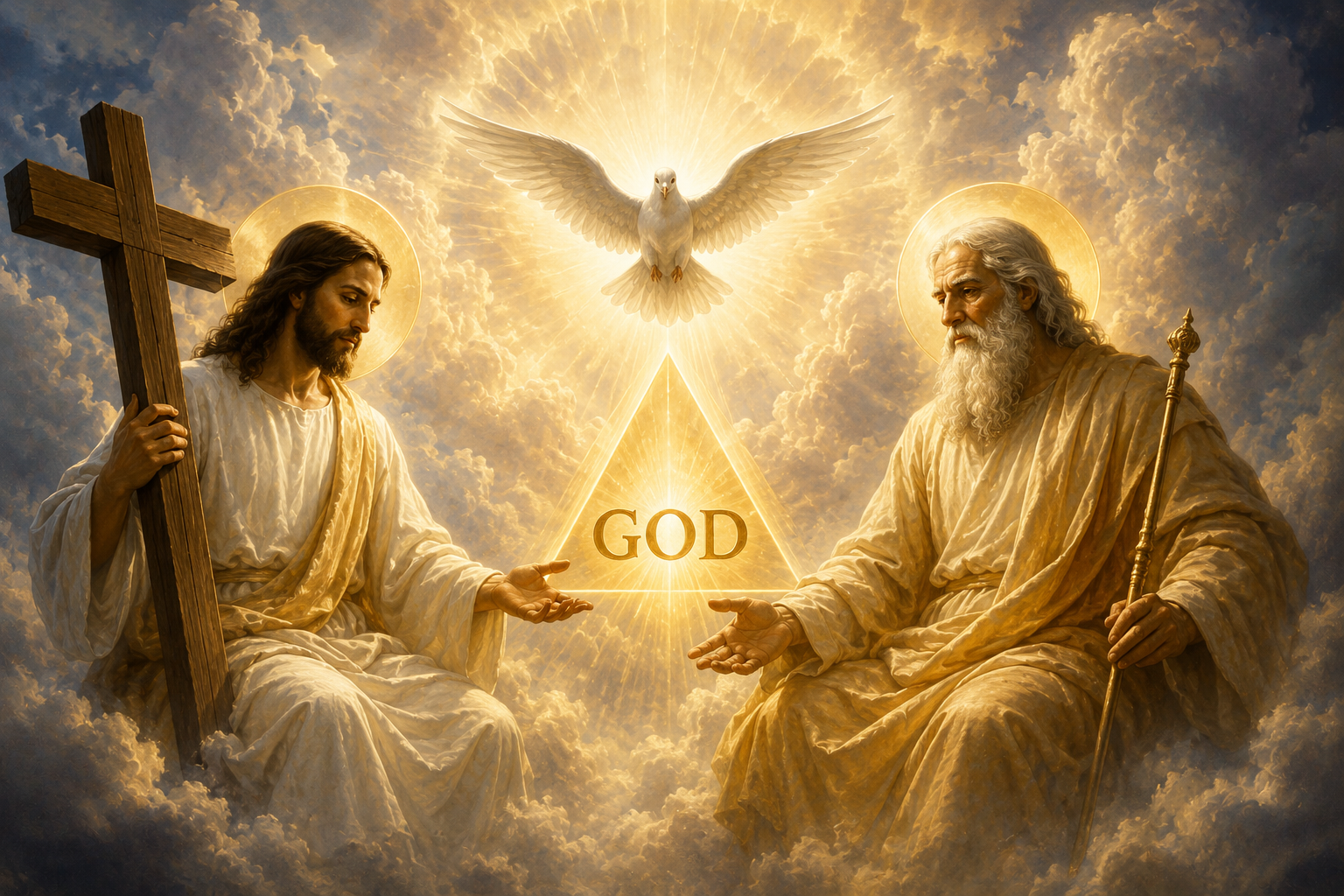
AI generated image.
Is Jesus God? This question has fueled serious debate across both Christian and non-Christian scholarship.
But the real issue isn’t just who Jesus is—it’s who God is. If that foundation is off, everything else gets distorted.
This is the starting point of the Godship of Christ series: define God, define the Godhead, then examine where Jesus fits—based on Scripture.
Who Is God?
Scripture gives us a baseline:
God is spirit (John 4:24).
He is the Father of spirits (Hebrews 12:9).
But that raises a sharper question—what actually distinguishes God from every other spirit?
If God is the Father of all spirits—Jesus, the Holy Spirit, angels, and human spirits—then He is the source. Every other spirit proceeds from Him. This clarifies the first difference between God and Jesus. God is the source, Jesus (His Son) proceeds from Him.
The attributes of God include His eternal nature, His highness, and His power. He has no beginning and no end. Daniel 7 describes Him as the Ancient of Days—meaning He exists beyond time. That part is straightforward.
From that perspective, this is my interpretive model of three elements that establish “Godship”:
Age (origin, placement in time)
Rank (position)
Authority (power and function)
The Case for Jesus’s Godship: Age
Let’s establish how Jesus meets these three Godship requirements throughout scripture.
Like God the Father, Jesus is also described in ways that point to an ancient nature:
Alpha and Omega, the first and the last (Revelation 1:11)
Before Abraham (John 8:58)
Sharing glory with the Father before the world existed (John 17:5)
Those statements push beyond normal created existence. They place Jesus in a category that overlaps directly with divine attributes, making Him a member of what we would call the “Godhead.” Let’s explore this Godhead deeper.
The Godhead: Rank
Genesis opens with:
“In the beginning, God created the heaven and the earth.”
The word used for “God” is Elohim.
Immediately after:
“The Spirit of God moved upon the face of the waters.”
So from the start, you see distinction within God’s activity—God and the Spirit of God operating together.
Then Genesis 2 introduces another title:
“LORD God” (YHWH Elohim)
Now the text shifts from Elohim speaking creation into existence (Genesis 1) to the LORD God forming and shaping it (Genesis 2).
We’re drawing a distinction here:
God (speaking creation)
Spirit of God (active presence)
LORD God (forming creation)
The New Testament connects Jesus directly to creation:
Hebrews 1:10 applies Psalm 102 to Jesus:
“You, Lord, laid the foundation of the earth…”
And 1 Corinthians 8:6 says:
“One God, the Father, from whom are all things…
and one Lord, Jesus Christ, through whom are all things…”
That’s a strong claim—Jesus isn’t just present in creation; He’s instrumental in it. So, does this mean that Jesus is the LORD God all throughout the Old Testament? My belief is, yes. Jesus’ ancient spirit is YHWH Elohim. Consider this distinction made in Deuteronomy 32:8-9:
“When the Most High (God) divided to the nations their inheritance, when he separated the sons of Adam, he set the bounds of the people according to the number of the children of Israel.
9 For the LORD’S (YHWH’S) portion is his people; Jacob is the lot of his inheritance.”
We see clearly in this verse YHWH receiving an inheritance from the Most High. In Hebrew tradition, the firstborn son of a father is the recipient of the best and largest inheritance among his siblings, even the next in line to inherit the kingdom that his father rules. This attribute of Jesus can be connected to Paul’s description of Him as "the “firstborn of all creation,” (Colossians 1:15). Not only that, Christ Jesus will eventually inherit all the kingdoms of this world (Revelation 11:15).
Authority
We’ve established Jesus’ ancient identity as YHWH Elohim, however, even after temporarily leaving His Godship and becoming equal to man, dying a sinner’s death, and being raised from the dead, Jesus’s rank increased. It was at the point after His ressurection and before HIs ascension back to Heaven that He said this:
“All power is given unto me in heaven and in earth.”
This line alone confirms the Lordship of Jesus Christ. While there are deeper depths to dig, we will stop here for now. In parts two and three of the Godship of Christ series, we will explore more of this Godship authority in the man Jesus and the Christ Jesus.
