

Can believers lose their salvation?

AI generated image.
In part one of our Salvation Series, we explored the multiple dimensions of salvation, which include healing from sickness, deliverance from demonic oppression, deliverance from a sin nature, and preservation from eternal judgement. The question then is this: Can believers lose their eternal salvation?”
If we look at every aspect of salvation, the question itself becomes multidimensional: Can believers lose their healing? Can believers lose their deliverance? Can believers who have been made free from sin fall back into sin? Or is there something that can cut those realities short? Let’s consider this example of salvation from sickness in John 5:14. In this verse, Jesus heals an impotent man from his 38 year long infirmity. But, what Jesus says afterward is key:
“Behold, thou art made whole (sōzō/saved), sin no more, lest a worse thing come unto thee,” John 5:14.
Jesus seems to imply here that once saved (healed) is not always saved (healed) at the point that sin finds expression in the man’s life again.
The same is true for deliverance from demons. In the parable of the unclean spirits in Luke 11:24-26, Jesus expresses that if a man who is delivered from an unclean spirit is found unoccupied, then the original unclean spirit will return with seven more spirits, leaving the man in a worse state than he was before.
Some may ask, what about eternal security? Doesn’t Ephesians 1:13 say believers are sealed with the Holy Spirit until the day of redemption?
Two things need to be made clear. First, yes—the Holy Spirit is a seal. Second, that seal is tied to sonship, not just belief. Not every believer has entered into the maturity of sonship required to fully partake in what that seal represents.
What Is the Seal of the Holy Spirit?
Scripture describes the Holy Spirit as the earnest—the guarantee—of our inheritance. But inheritance is not for everyone; it is for heirs.
Paul defines who these heirs are in Romans 8:13-17:
“For if ye live after the flesh, ye shall die: but if ye through the Spirit do mortify the deeds of the body, ye shall live.
For as many as are led by the Spirit of God, they are the sons of God…
And if children, then heirs; heirs of God, and joint-heirs with Christ; if so be that we suffer with him, that we may be also glorified together.”
The distinction is clear. Heirs are not merely those who believe, but those who are led by the Spirit—those who walk in obedience and live transformed lives.
What Does It Mean to Suffer with Christ?
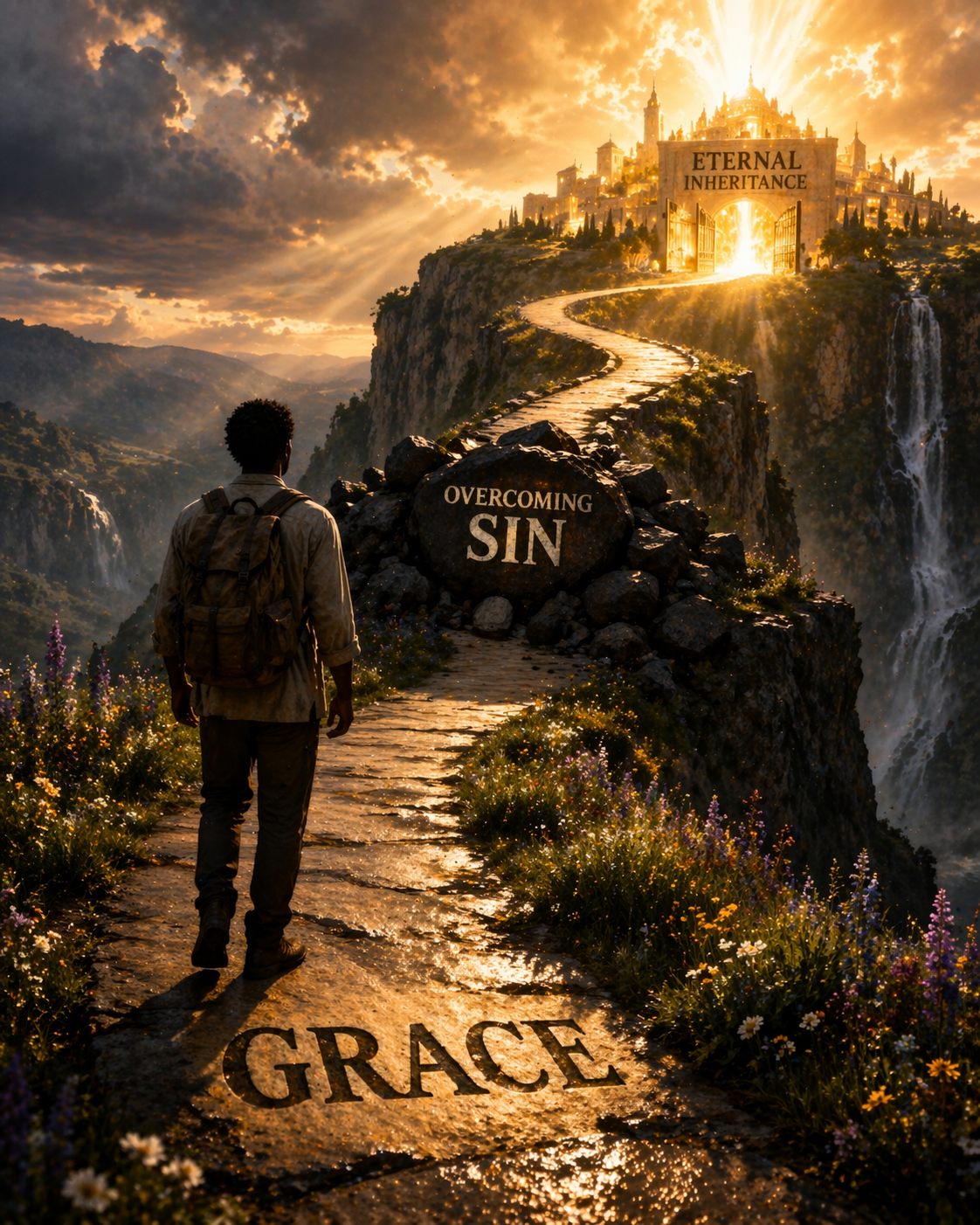
AI generated image.
Suffering with Christ is not just about enduring hardship. It is about dying to sin.
To “mortify the deeds of the body” means to put sin to death—to actively reject the pull of the flesh and live by the Spirit. This is the same pattern Christ demonstrated: denying the flesh and yielding fully to the will of God.
The believer who qualifies for the eternal inheritance is the one who has crucified the flesh and been made alive by the Spirit, walking in righteousness.
These two examples of deliverance, plus, the requirements to attain the seal of the Holy Spirit implies that permanent salvation is conditional. At the center of it all is this: overcoming sin is not optional.
It is the dividing line that determines whether a believer walks fully in the inheritance of salvation or falls short of it.
The common objection to conditional salvation is this: If once saved is not always saved, then that means salvation is not free and must be earned, which contradicts Ephesians 2:8-9 which states: “8 For by grace are ye saved through faith; and that not of yourselves: it is the gift of God: 9 Not of works, lest any man should boast.” Is salvation a free gift? Or is it conditional?
The truth is, there are no contradictions between these two realities. What verses like Ephesians 2:8-9 express is that grace is a free gift by which we access salvation, via our faith (Romans 5:1-2). Salvation is not “earned.” It is accessed. The question, then, is not “can we lose our salvation;” rather, it is can we lose our access to salvation, which is by grace through faith? The answer is a resounding yes.
“Salvation is not “earned.” It is accessed.”
True believers can both fall from the faith and fall from grace, which are the only two access points to salvation. This leads to a failure to attain the eternal inheritance promised to those who overcome sin and enter into sonship.
In part three of the Salvation Series, we will explore how this is indeed possible, and how we can maintain our hope of salvation.
